• Home Page
  • All Posts
  • About us
Saturday, July 4, 2026
SocialPolicy English edition
  • Events
  • Employment
    • Jobs
    • Traineeships
  • Lifelong Learning
    • Master’s Studies
    • PhD Opportunities
    • Scholarships
  • Social Policy
    • Articles
    • Social Protection
    • Social Cohesion
    • Gender Equality
    • Employment Policies
    • Social Economy
    • Health Policies
    • Mental Health
    • Social Housing
    • Social Inclusion
    • Social Policy Programs
  • Social Theory
  • Opinion
No Result
View All Result
  • Events
  • Employment
    • Jobs
    • Traineeships
  • Lifelong Learning
    • Master’s Studies
    • PhD Opportunities
    • Scholarships
  • Social Policy
    • Articles
    • Social Protection
    • Social Cohesion
    • Gender Equality
    • Employment Policies
    • Social Economy
    • Health Policies
    • Mental Health
    • Social Housing
    • Social Inclusion
    • Social Policy Programs
  • Social Theory
  • Opinion
No Result
View All Result
SocialPolicy English edition
No Result
View All Result
Home Social Policy Social Cohesion

Report hate crime, support victims

Significant barriers to reporting hate crime across the EU hinder victims’ access to protection and justice

Report hate crime, support victims
Share on FacebookShare on Twitter

Significant barriers to reporting hate crime across the EU hinder victims’ access to protection and justice, finds a new report of the EU Agency for Fundamental Rights (FRA). Many victims do not report attacks, as it is too difficult or they do not trust the police. FRA calls on EU countries to encourage hate crime reporting, improve its recording and ensure victims can get support, protection and justice.

“EU countries have a duty to ensure access to justice for all. But too many hate crime victims do not report being attacked and too many countries do not record hate crimes properly,” says FRA Director Michael O’Flaherty. “This needs to change. Countries should simplify reporting and improve hate crime recording, investigation and punishment to fully uphold victims’ rights.”

FRA’s latest report ‘Encouraging hate crime reporting: the role of law enforcement and other authorities’ highlights the gaps in hate crime reporting across the EU. FRA calls on EU countries to remove barriers that prevent victims and witnesses of hate crimes from coming forward and to encourage reporting. The report highlights what needs to change to move towards a victim-centred approach so victims can get justice:

  • End discrimination and empower victims – EU countries need to empower victims and witnesses to come forward and report hate crimes. They need to tackle structural discrimination and prejudice in society, eliminate discriminatory policing, publicly condemn hate crime and raise victims’ awareness of their rights and support available.
  • Improve reporting, recording and referrals – EU countries need to make hate crime reporting easier, for example by enabling third-party or anonymous reporting. This needs to be coupled with improvements to national recording and data collection systems. Standardised referrals to and from support services would also better protect and support victims.
  • Build capacity to tackle hate crime – EU countries should provide practical guidance and training to the police, establish specialised hate crime units and ensure structured cooperation between law enforcement authorities, victim support organisations, civil society organisations and equality bodies.

Millions of people across the EU experience hate-motivated violence and harassment. This can be due to their ethnic or immigration background, skin colour, religion, gender, sexual orientation or disability. FRA’s surveys of immigrants and ethnic minorities, Jews, LGBTI people or Roma and Travellers shed light on the extent of discrimination and violence these groups face in Europe.

FRA’s recent Fundamental Rights Survey highlights that some minority groups experience twice as much violence as people generally.

Up to 9 in 10 people do not report being attacked. Most think that nothing would change if they report it, it is too difficult to report or they do not trust the police.

The new EU Anti-racism Action Plan 2020-2025 and the EU Strategy on victims’ rights 2020-2025 both stress the need to improve hate crime reporting and recording.

The recent key guiding principles on encouraging hate crime reporting and this report should help countries put an effective victim-centred approach to reporting hate crimes into place.

FRA’s new project will look into understanding online hatred towards certain groups. Results are due in 2023.


Source: Report hate crime, support victims | European Union Agency for Fundamental Rights (europa.eu)


Read Also  Employment and Social Developments in Europe 2022 report shows young people most affected by job losses to economic impact of COVID-19
Tags: human rightssocial cohesion

Related Posts

2021 Annual Report of the Social Protection Committee now available

Deal to improve the protection of vulnerable adults

by fGxfvU1nE7
May 17, 2026
0

Equal access to justice for adults who require support and safeguards in decision-making.  

Progress in rule of law in EU but further action needed, finds report

by fGxfvU1nE7
July 18, 2025
0

This year's report confirms that there is a positive trajectory in many EU countries, where important reforms have been carried out in...

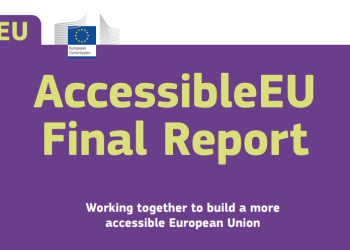
AccessibleEU surpassed all its objectives last year, as reported in the 2024 Final Report

AccessibleEU surpassed all its objectives last year, as reported in the 2024 Final Report

by fGxfvU1nE7
July 18, 2025
0

This report provides a comprehensive overview of the actions undertaken during AccessibleEU’s second year contract

Agreement reached on the European Social Fund+ for 2021-2027

The rule of law in the EU remains in peril, MEPs say

by fGxfvU1nE7
June 1, 2025
0

MEPs call for robust and effective action by EU countries and the Commission.

Load More
Next Post
Employment and Social Developments in Europe review shows diverse impact of COVID-19 crisis

Employment and Social Developments in Europe review shows diverse impact of COVID-19 crisis

Enable Roma communities to recover from the pandemic, say human rights heads

European Roma Holocaust Memorial Day: Statement by President von der Leyen, Vice-President Jourová and Commissioner Dalli

EU Blue Card: Commission welcomes political agreement on new rules for highly skilled migrant workers

Traineeships (Knowledge Management and Communications Unit)

Leave a Reply Cancel reply

Your email address will not be published. Required fields are marked *

No Result
View All Result

Recent Posts

  • Deal to improve the protection of vulnerable adults
  • Commission welcomes important step to modernise EU social security coordination rules
  • The ‘Right to Injustice’: A Critique of Exclusions in Greek Tertiary Education as bureaucratic trauma
  • Full report on European Child Guarantee survey among children now available
  • Union of Skills: One year of concrete action to keep Europe competitive

Subscribe to Blog via Email

Enter your email address to subscribe to this blog and receive notifications of new posts by email.

Join 30 other subscribers

About us

The present English Edition of socialpolicy.gr (SocialPolicy English Edition) is based on the need to curate and present social policy topics in depth.

Furthermore, we consider that many of our readers should be more easily informed by reading our English language content, thus adding to the accessibility of the project.

Recent Posts

  • Deal to improve the protection of vulnerable adults
  • Commission welcomes important step to modernise EU social security coordination rules
  • The ‘Right to Injustice’: A Critique of Exclusions in Greek Tertiary Education as bureaucratic trauma
  • Full report on European Child Guarantee survey among children now available
  • Union of Skills: One year of concrete action to keep Europe competitive

Popular Posts

  • Femicide: Name it, count it, end it!

    5 questions and answers about gender-based violence

    0 shares
    Share 0 Tweet 0
  • The Birth of Greek Constitutionalism

    0 shares
    Share 0 Tweet 0
  • Mental Health Officer @ MSF International

    0 shares
    Share 0 Tweet 0
  • Working at Terre des hommes

    0 shares
    Share 0 Tweet 0
  • HR Coordinator @ MSF (Field job)

    0 shares
    Share 0 Tweet 0
  • About us
  • All Posts
  • Collaborations
  • Home Page

© 2021 socialpolicy.gr

No Result
View All Result
  • About us
  • Events
  • Employment
    • Jobs
    • Traineeships
  • Lifelong Learning
    • Master’s Studies
    • PhD Opportunities
    • Scholarships
  • Social Policy
    • Articles
    • Gender Equality
    • Employment Policies
    • Social Economy
    • Health Policies
    • Mental Health
    • Social Cohesion
    • Social Housing
    • Social Inclusion
    • Social Policy Programs
    • Social Protection
  • Social Theory
  • Opinion
  • All Posts

© 2021 socialpolicy.gr

Skip to content
Open toolbar Accessibility Tools

Accessibility Tools

  • Increase TextIncrease Text
  • Decrease TextDecrease Text
  • GrayscaleGrayscale
  • High ContrastHigh Contrast
  • Negative ContrastNegative Contrast
  • Light BackgroundLight Background
  • Links UnderlineLinks Underline
  • Readable FontReadable Font
  • Reset Reset
We use cookies to ensure that we give you the best experience on our website. If you continue to use this site we will assume that you are happy with it.